
“We’re on Telegram, Instagram, email, and telephony” — that sounds like a modern approach to service. But what is omnichannel really? Being present across many channels simultaneously is only the first step. True omnichannel support means something qualitatively different: the customer moves between channels, and the company sees a single continuous conversation. This difference between “being everywhere” and “being coordinated everywhere” determines whether the customer experience will be fragmented or seamless.
Multichannel Support: Benefits and the Hidden Trap
Multichannel support is when a company uses multiple communication channels independently of each other. Each channel exists as a separate island: separate operators, a separate CRM, separate statistics. The customer wrote on Telegram — one operator. Called — another. Emailed — a third. And none of them know the customer already reached out twice before.
The main trap of this approach:
- Operators waste time establishing context that the customer already provided.
- Customer data is scattered across different systems with no unified picture.
- Service quality depends on which shift and which operator the customer happens to reach.
What Omnichannel Is: The Key Difference
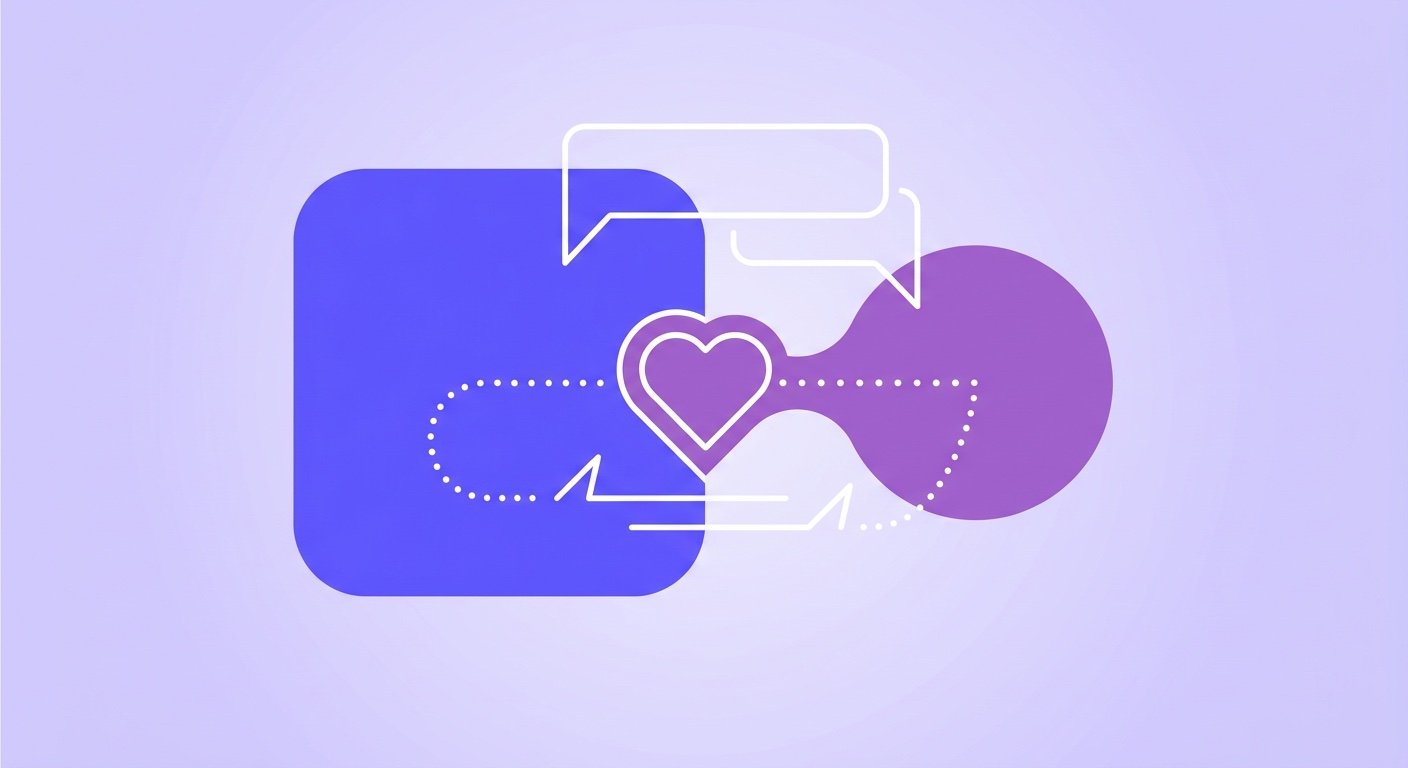
Omnichannel is an approach where all customer communication channels are united into a single ecosystem with shared memory. When a customer starts a conversation in a website chat, continues on Telegram, and finishes with a phone call — the operator sees the entire dialogue in one window. The transition between channels is invisible to the customer. That is the seamless customer experience.
Key characteristics of true omnichannel:
- Single customer profile: all requests, purchases, and interactions are stored in one record.
- Contextual memory: the agent or AI system sees previous conversations regardless of channel.
- Consistent ToV: communication tone and style are identical across all platforms.
- Unified analytics: the manager sees consolidated metrics across all channels, not separate reports.
Comparing Approaches: What to Choose for Your Business
| Criterion | Multichannel | Omnichannel |
|---|---|---|
| Customer context | Lost during transitions | Fully retained |
| Operator workload | Higher (repeat clarification) | Lower (context visible immediately) |
| Analytics | Fragmented by channel | Single consolidated view |
| Implementation cost | Lower initially | Higher, but quickly recovered |
| Customer experience | Fragmented | Seamless |
Messenger Integration: The Technical Side
Messenger integration within an omnichannel strategy is most often the number one technical challenge for mid-sized and large businesses. The reason: each platform (Telegram, Viber, WhatsApp, Instagram Direct, Facebook Messenger) has its own API with its own rules and limitations. Traditional solutions required separate integrations for each channel — months of developer work and constant maintenance.
Modern no-code omnichannel platforms solve this differently: connecting a new channel takes minutes via ready-made connectors, and all data flows into a single system automatically. The operator sees messages from Telegram, Instagram, and email in one window without switching between tabs.
How to Start the Transition to Omnichannel
Transitioning does not necessarily mean a complete technological redesign from day one. An effective strategy is gradual:
- Step 1: Audit current channels and identify gaps in the customer journey.
- Step 2: Unite two or three of the most active channels on a single platform.
- Step 3: Train the team to work in a unified interface.
- Step 4: Connect an AI agent to handle routine requests across all channels simultaneously.
A seamless customer experience is not a future dream — it is today’s standard for companies that want to retain customers long-term. If your operators are still switching between 5–6 tabs and manually searching for the context of previous conversations, that is a signal it is time to move from multichannel to true omnichannel. Book an Intelswift demo and see how a single platform unites all channels in a single day.